· Michele Mazzucco · Post · 11 min read
The psychology of control: why the best queues make customers feel in charge
Customers don’t hate waiting — they hate uncertainty. Control, transparency, and fairness matter more than duration.

Photo by Caleb Woods on Unsplash
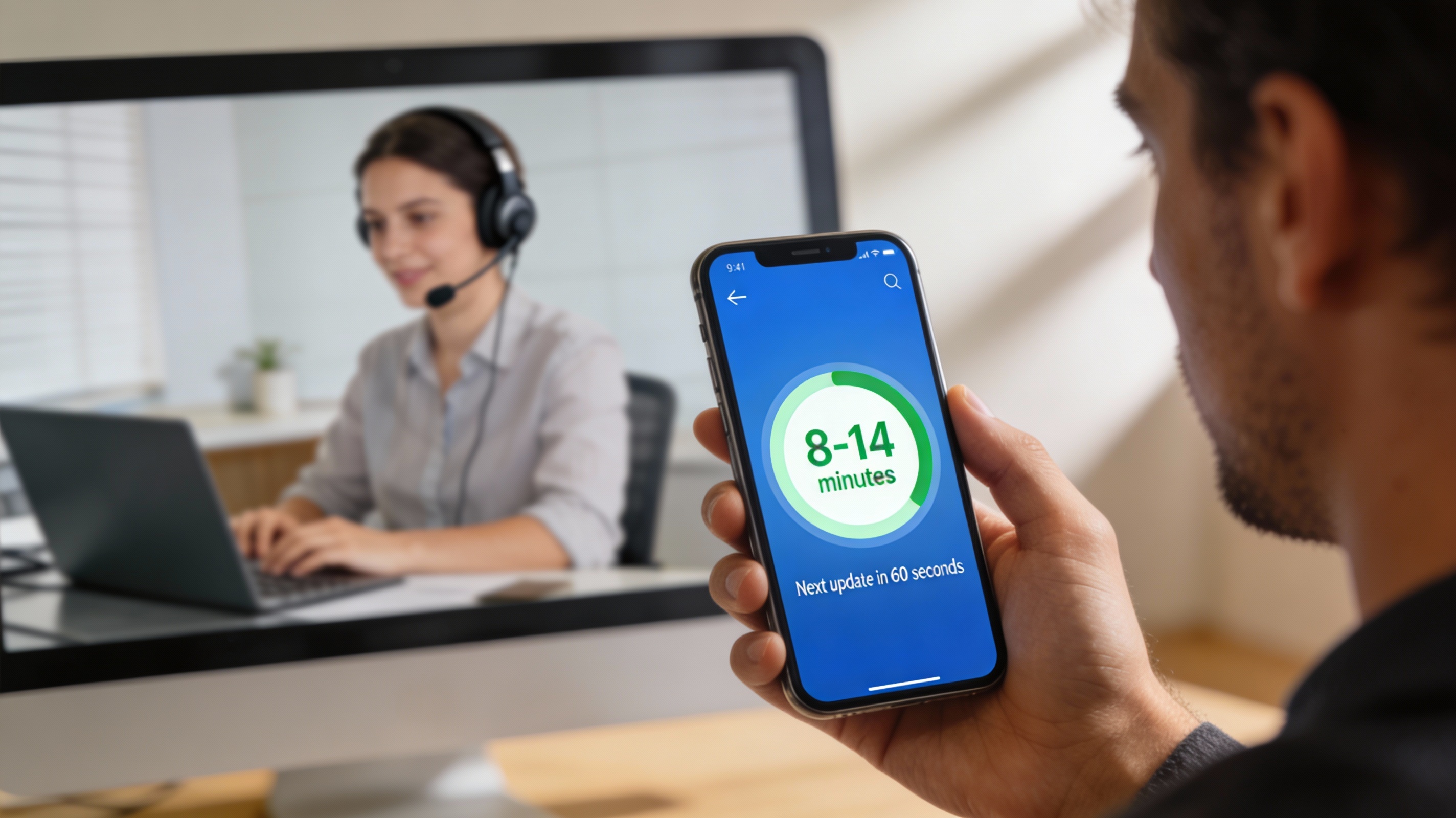
Imagine standing in line at a busy coffee shop. The barista is efficient, however there is no sign of progress—no counter, no app update, just a sea of impatient faces. Minutes stretch into eternity. Now picture the same scenario with a digital display showing your position: “You are 3rd in line. Estimated wait: 2 minutes.” Suddenly, the wait feels manageable. You check your phone, chat with a friend, as control is restored.
This isn’t magic; it is just psychology. In an age of instant gratification, waiting has become the ultimate test of patience. But behavioral science tells us it is not the duration that frustrates us—it is the lack of control. Uncertainty triggers our primal fear of the unknown, turning a simple queue into a source of anxiety. Yet, when businesses design queues that empower customers with visibility, options, and equity, they don’t only reduce complaints; they build advocates.
Drawing from decades of research in behavioral economics and customer psychology, this article explores why control matters more than speed in queue management. Building on our guide to designing virtual queues that work, we focus here on the psychological levers that make any queue—physical or digital—feel empowering rather than frustrating. We will uncover the hidden costs of uncertainty, introduce three psychological levers for better design, quantify the ROI, and provide a practical framework to implement it. By the end, you will see how the best queues transform passive waiters into engaged participants.
📍 Note
Table of contents
- The hidden cost of uncertainty in queues
- Control as the antidote: three psychological levers
- From psychology to profit: the ROI of control
- Designing queues for control: a practical framework
- Quantifying control: introducing the Control Perception Index (CPI)
- Case studies: control in action
- Conclusion: control as the future of customer experience
The hidden cost of uncertainty in queues
Research from behavioral psychology shows that perceived control is a core human need. In queues, uncertainty amplifies stress: “How long will this take?”, “Am I being treated fairly?”, “What if I miss my slot?”. Neuroscience backs this up—uncertainty activates the brain’s amygdala, the fear center, leading to heightened cortisol levels and decision fatigue.
A landmark study by Dan Ariely on “predictable irrationality” found that people prefer a painful but predictable experience over an uncertain one. In experiments, participants chose electric shocks with known timing over unpredictable ones, even when the total pain was higher. This “preference for the known” explains why customers endure longer waits with updates than shorter ones without.
This extends to digital queues. Online shoppers abandon carts at rates up to 70% during peak times, not because of the wait, but because of the opacity—spinning loaders with no ETA. A Baymard Institute study found that unclear shipping estimates alone cause 21% of cart abandonments.
In healthcare, patients report higher anxiety from invisible appointment queues than from visible ones, even if the actual wait is shorter. A survey by the American Medical Association showed that 40% of patients feel “helpless” during waits, leading to no-shows and dissatisfaction.
Beyond psychology, the economic toll is staggering. Uncertainty drives churn: according to Gartner research, customers who feel out of control are 2-3 times more likely to switch brands. In retail, this means lost sales; in services like banking or telecom, it erodes lifetime value. Operationally, it creates inefficiencies—more complaints mean more staff time on resolution, not service.
The result? Lost revenue, damaged loyalty, and operational inefficiencies. Uncertainty doesn’t just erode satisfaction; it creates a feedback loop of churn, where frustrated customers spread negative word-of-mouth, amplifying the problem. But the antidote is within reach: design queues that give customers the reins.
Control as the antidote: three psychological levers
To combat uncertainty, the best queues leverage three levers rooted in behavioral science: transparency, choice, and fairness. These are not add-ons—they are design imperatives.
1. Transparency: visibility reduces anxiety
Customers crave information. Real-time updates—whether a digital progress bar, an app notification, or a physical display—give a sense of agency. This isn’t just nice-to-have but a psychological necessity; without it, the brain fills the void with worst-case scenarios, escalating stress.
- Why it works: Studies published on the Journal of Consumer Research show that transparent waits reduce perceived duration by up to 20%. It activates the brain’s reward system, releasing dopamine as progress is made. In one experiment, participants waiting for a download with a progress bar reported 15% less frustration than those without. Psychologically, transparency combats the “illusion of inaction,” where uncertainty amplifies impatience.
- Psychological impact: It fosters trust by aligning expectations with reality, reducing cognitive dissonance. Customers feel respected, not ignored, which builds emotional loyalty.
2. Choice: options empower decision-making
Giving customers control over their wait—reschedule, prioritize, or opt out—shifts the power dynamic. It’s the difference between being told what to do and choosing your path.
- Why it works: According to self-determination theory, autonomy boosts motivation and satisfaction. Customers who choose their queue path feel less victimized and more invested. A Psychological Science study found that offering choices in waiting scenarios increases tolerance by 30%, as it gives a sense of agency.
- Psychological impact: Choice taps into our need for autonomy, reducing feelings of helplessness. It transforms passive waiting into active participation, enhancing self-efficacy and overall well-being.
3. Fairness: Equity builds trust
As discussed in our previous article on Queue Equity, uneven waits erode credibility. Fairness isn’t just ethical—it’s psychological. When customers perceive inequity, it triggers social comparison and resentment.
- Why it works: Research from Harvard Business Review indicates that perceived unfairness hurts loyalty more than delays. Customers remember inequity long after the wait ends, leading to negative reviews and churn. For example, a study on airline queues found that passengers in “unfair” lines rated satisfaction 40% lower, even if waits were identical.
- Psychological impact: Fairness satisfies our innate sense of justice, rooted in evolutionary psychology. It minimizes envy and promotes social harmony, making customers more forgiving of delays.
💡 For technical details on implementing fairness metrics, refer to our article on queue equity.
From psychology to profit: the ROI of control
Investing in control-driven queues is strategic. Behavioral science quantifies the impact, turning psychology into profit. Let’s break it down:
- Retention boost: Transparent queues can increase customer satisfaction by 15-25%, per McKinsey research. In banking, for example, apps with queue visibility reduced abandonment by 30%, translating to millions in retained deposits. Choice adds another layer: flexible options in telecom support lines cut churn by 18%, as customers feel empowered rather than trapped.
- Revenue uplift: Empowered customers spend more. A study by Forrester found that customers with control over service timing spend 10% more. In retail, virtual queues allow shoppers to browse while waiting, increasing impulse buys. Fairness drives loyalty: equitable systems in e-commerce see 22% higher repeat purchases, as trust builds long-term value.
- Brand loyalty: Fair queues align with ESG goals, differentiating your business in competitive markets. Companies like Amazon Prime exemplify this—control over delivery (and by extension, waits) is a key value driver, contributing to their 200+ million subscribers. In healthcare, patient portals with scheduling control have reduced complaints by 35%, enhancing reputation and referrals.
The math is simple: control turns waiting from a cost center into a trust builder. Calculate your potential ROI: if uncertainty costs you 5% in churn annually, restoring control could save millions while boosting satisfaction. Tools like queue analytics platforms can measure this in real-time, providing data to justify investments.
🔔 Disclaimer
Designing queues for control: a practical framework
To embed control into your queues, you can follow this five-step framework. It is iterative—meaning you can start small, measure, and refine. It is important to focus on the psychological dimensions to ensure the experience feels empowering.
- Audit current pain points: Map customer journeys for uncertainty triggers (e.g., no ETAs, no alternatives). Use surveys or heatmaps to identify hotspots. Ask: Where do customers feel powerless? This step assesses emotional friction.
- Layer in transparency: Add real-time updates and progress indicators. Integrate with existing systems like apps for digital or displays for physical. Then test for clarity: Does it reduce anxiety? Measure psychological relief through feedback.
- Introduce choice: Offer rescheduling, virtual options, or priority tiers. Ensure options are equitable and easy to use. Pilot with a subset of customers to gauge uptake. Evaluate how it boosts autonomy and satisfaction.
- Measure fairness: Track QEI and adjust for equity. Monitor disparities across segments (e.g., age or channel). The idea is to use data to inform design—e.g., if phone users wait longer, add more agents—with a focus on perceived justice.
- Test and iterate: In this step you can use A/B testing on digital queues to refine based on feedback. Measure NPS, churn, and revenue. Involve customers in beta tests for insights. Prioritize psychological metrics like stress reduction.
As mentioned above, start small—pilot in one channel—and scale. Tools like queue management software can automate much of this. The ultimate goal is to build queues that feel like partnerships, not prisons.
Quantifying control: introducing the Control Perception Index (CPI)
To quantify control, we introduce a simple Control Perception Index (CPI). This index measures the perceived control customers feel during their wait, based on three key dimensions: transparency, choice, and fairness.
Our CPI is calculated as
Where TP measures the Transparency Score, CS the Choice Score, FS the Fairness Score and CPI ranges from 1 (no control) to 10 (full control). Each component is rated based on customer feedback, with higher scores indicating greater perceived control.
To calculate each score, use post-wait surveys with Likert-scale questions (1-10). For example:
- Transparency Score (TP): Ask “How clear were the wait time updates?” and “Did you feel informed about your position?” Average responses. High scores come from real-time ETAs and progress bars.
- Choice Score (CS): Ask “How many options did you have to manage your wait (e.g., reschedule, switch channels)?” and “Did you feel you could choose your path?” Score based on availability and ease of use.
- Fairness Score (FS): Ask “Did the queue feel fair compared to others?” and “Were priorities applied equitably?” Link to QEI for objective data; subjective perception is key.
A higher CPI indicates that customers feel more in control, which correlates with higher satisfaction and lower churn. A CPI above 7 is generally considered optimal for customer retention and loyalty.
Using the CPI allows businesses to quantify the impact of queue management changes on customer perception. It provides a clear, actionable metric that correlates with key business outcomes like retention, satisfaction, and revenue.
Survey customers post-wait to track improvement in CPI. Aim for a CPI > 7 for optimal satisfaction. This metric complements design-focused tools by measuring emotional impact.
Case studies: control in action
Real-world examples illustrate how control transforms queues from liabilities to assets.
☕ Retail: Starbucks’ Mobile Ordering Revolution
Before app-based ordering, Starbucks lines were chaotic, with uncertainty fueling impatience. By introducing mobile ordering with ETAs and customization, they gave customers control. Result: 20% faster perceived waits, higher satisfaction, and increased sales as customers added items while “waiting.”
🧑🏼⚕️ Healthcare: Mayo Clinic’s Patient Portals
Patients dreaded appointment waits, often arriving early out of fear. Mayo Clinic’s portal allows check-ins, rescheduling, and progress tracking. Studies show anxiety dropped 25%, no-shows fell 15%, and patient loyalty soared. Fairness was key: equal access for all demographics via simple interfaces.
🛫 Airports: Amsterdam Schiphol’s Smart Queues
We talked about Schipol airport in Amsterdam before. Once again, Schiphol leads the way with AI-driven displays and apps for real-time updates and priority options. Passengers feel in control, reducing complaints by 30%. The system balances efficiency with equity, prioritizing families or disabled travelers transparently.
These cases prove that control isn’t a feature but a strategy. Start with one channel, measure impact, and scale.
💡 For more on designing virtual queues, see our guide on virtual queues that work. This article complements it by focusing on the psychological foundations.
Conclusion: control as the future of customer experience
In the psychology of queues, control isn’t a luxury—it is a necessity. By prioritizing transparency, choice, and fairness, businesses don’t just manage waits; they redefine them. In a world obsessed with speed, the companies that master control will own customer loyalty. From neuroscience to ROI, the evidence is clear: empowered customers are loyal customers.
But this is just the beginning. As AI and personalization advance, queues could become proactive—predicting needs and offering tailored options. Imagine a future where waits are opportunities for engagement, not endurance. Leaders who embrace this now will lead the pack.
Ready to give your customers the power? Let’s design queues that empower, not frustrate. Contact us to quantify your control gaps and build solutions that drive results.
📬 Get weekly queue insights
Not ready to talk? Stay in the loop with our weekly newsletter — The Queue Report, covering intelligent queue management, digital flow, and operational optimization.